about me > birding
birding, birdwatching, twitching - whatever you call it!
It really does seem to creep up on you. One minute you'd call any black bird a 'crow'. The next you are driving 45 minutes, wading through ankle-deep puddles, standing in one place for an hour, all just to catch a glimpse of a ringtail Hen Harrier you read about on the nibirds rare sightings blog - and the best part, I didn't even see it...
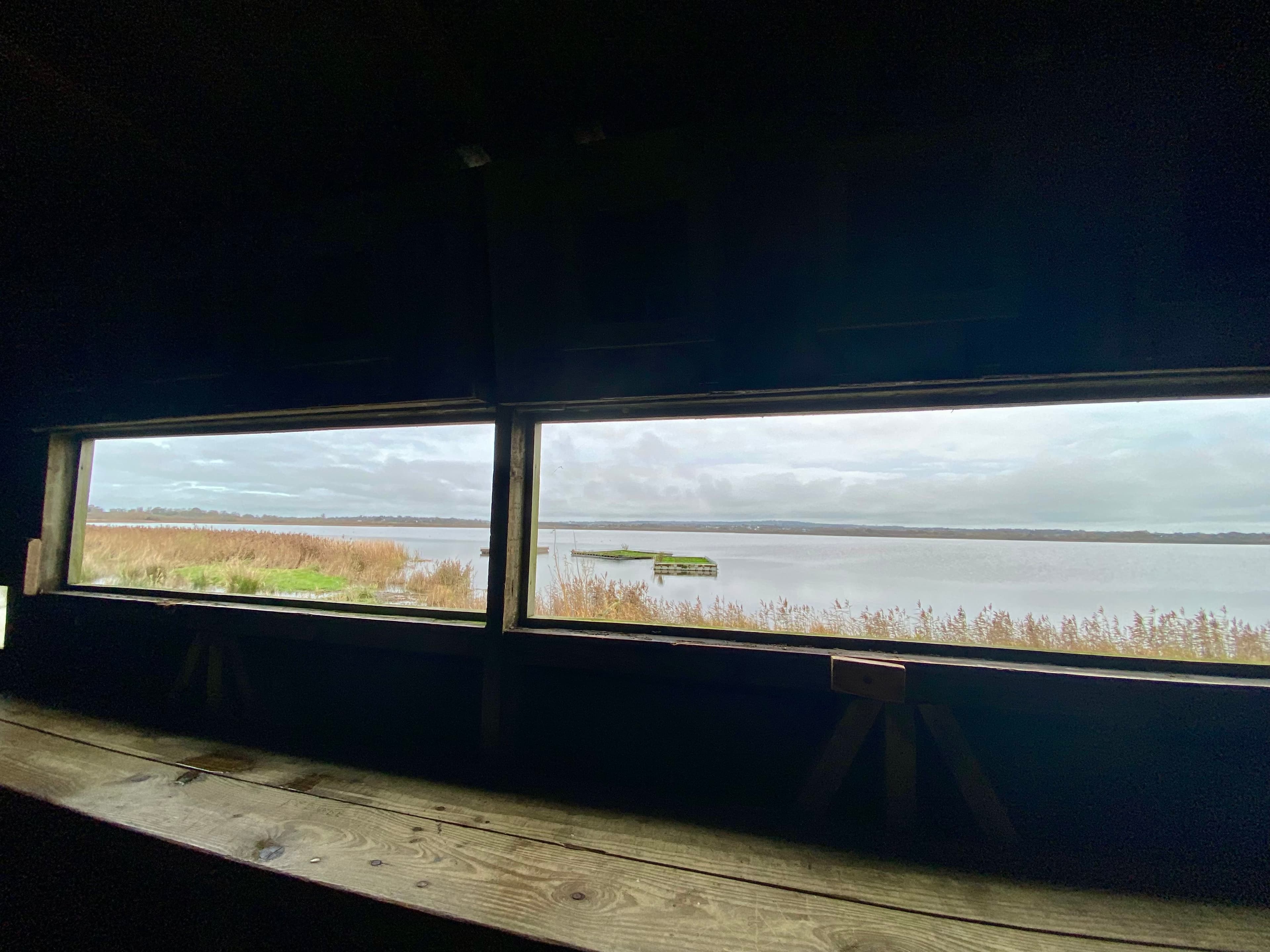
the lovely Portmore Lough; i made it to the hide with feet wetter than i'd maybe have liked... that's why you keep spare socks in the car!
I think people have historically and still do consider birding to be a hobby reserved for older people - like you'd only ever do it if you were retired and had all the money and all the free time. And I suppose that's what really surprised me about it; I became a birdwatcher on my lunch breaks, seeing and hearing Pied Wagtails while walking to the shop for a can of Coke. I became a birdwatcher on my Saturday cycles along the coast, seeing Cormorants and Shags all piled atop one another on a rocky outcrop. I became a birdwatcher sitting in my car eating a McDonalds, as a curious Hooded Crow watched me through the window hoping I'd throw it one of my chips.
I suppose I just started to take more notice of the world around me. Suddenly I'm walking to the shop on my lunch break and I recognise the familiar birdsong of the wagtails through the din of the passing cars. Soon after I was out on my bike for a nice evening cycle, when coming up along the lough I spotted a little black and white shape diving underneath the water. "Funny looking duck", I thought to myself, but I swear it had red feet. "What kind of duck has red feet? Wait, can ducks can swim underwater?" This mysterious creature had really piqued my interest. I watched on for another couple of minutes as it dove and rose, and decided this was one for the all-knowing internet; Google, show me "black and white bird red feet diving uk".
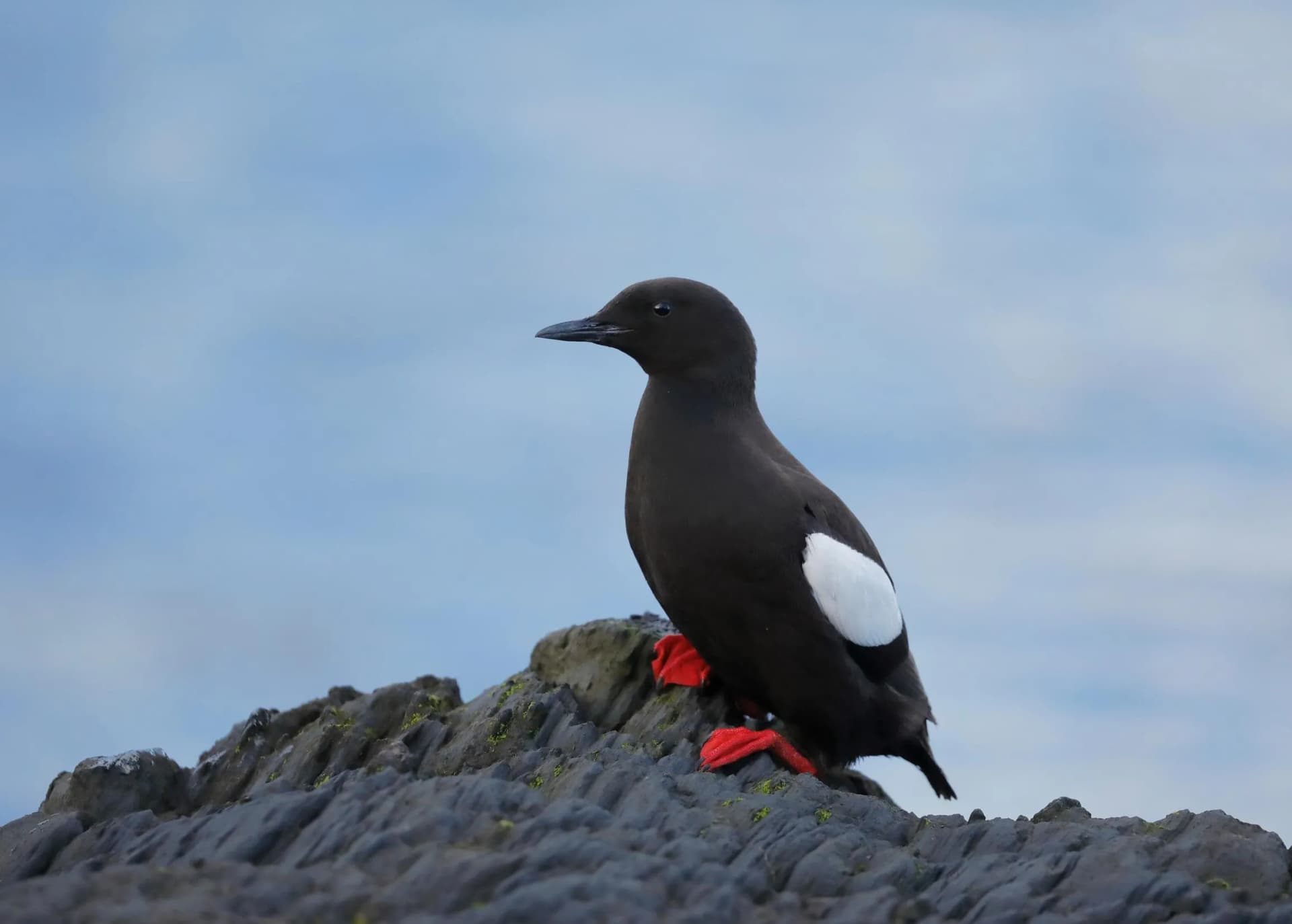
Google says it's a Black Guillemot, live in the flesh, and verifiably NOT a duck. Yeah right. I learn that these are common birds here in the UK and Ireland, yet I've never seen one before. Or maybe I had and just never cared enough to give it my time of day. I think this was the first time a random bird had ever captured my full attention.
not my image, taken from the RSPB website
I remember thinking how cool it looked with it's flashy red legs and (almost) completely jet-black body, but that someone must have forgotten to colour in their wings. Everyone has heard David Attenborough narrate the nature documentaries starring the beautiful birds-of-paradise, with the bright colouring and extravagant mating rituals - I think that's typically where your mind goes if someone tells you to imagine a cool-looking bird; the fanned tail of a peacock or a technicolour parrot. But this was the first time I sat and appreciated the ones that were living just down the road. The little Guillemot doesn't know, but it kickstarted the slow change to my perception of local wildlife over the last couple of years. I'd love to tell it.
Though it'd probably just look at me all weird and think, "Huh, funny looking duck".
in it for real
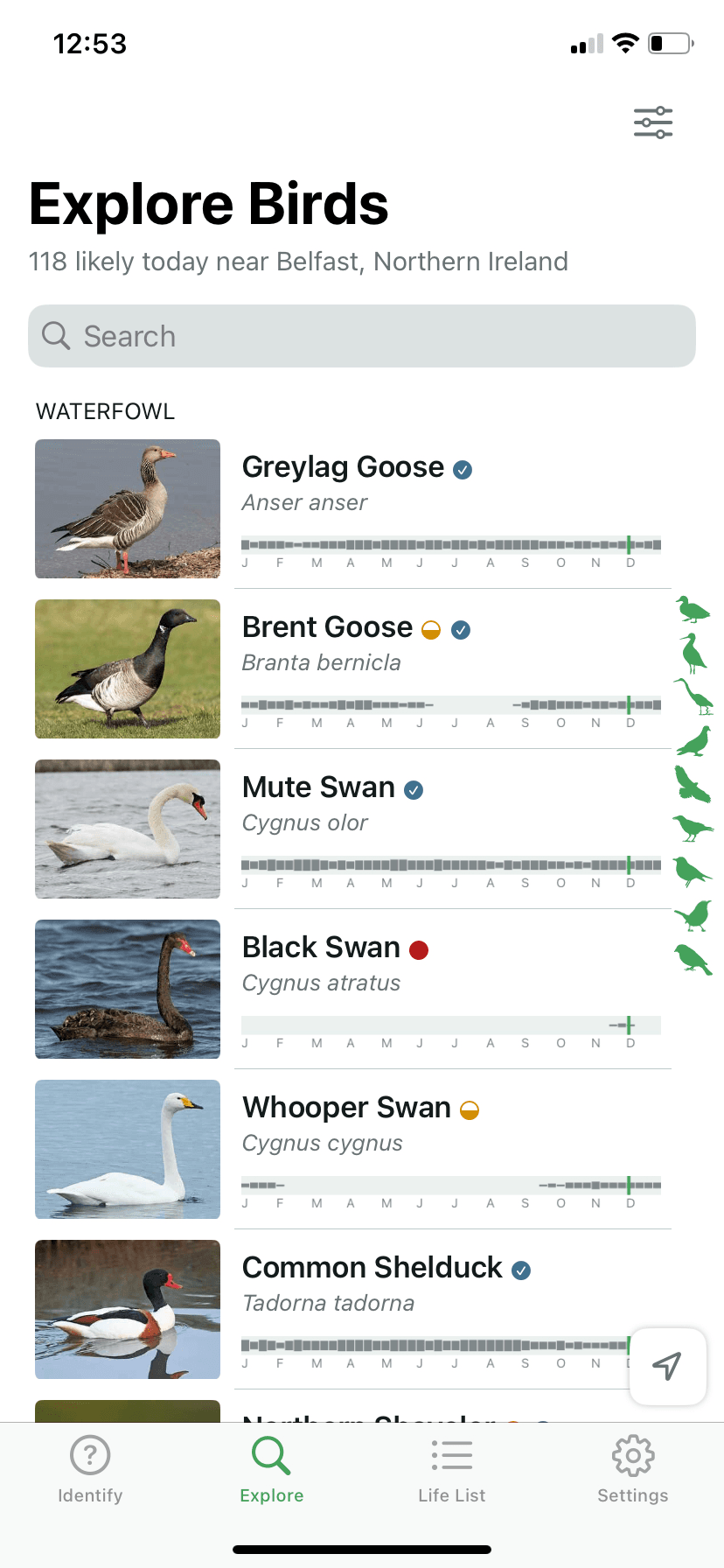
After my run-in with the guillemot, I learned of the Merlin Bird ID app by Cornell Lab. It shows lots of information and pictures of commonly reported species in your area, and can even identify the birds around you in real time using just the sound of their calls! The bit that really had me interested though was the 'Life List' - basically, you keep a log of your first sightings of unique species, attaching information like the date and location you saw them. Much like Pokemon, minus the part where you catch them and make them fight to the death. Now when I left the house I'd catch myself scanning the sky and the shrubbery searching for a new 'Lifer' to add to the list.
It sounds funny, but if someone asked if I was a birdwatcher at this point, I could have looked them dead in the eye and said no... It still wasn't something I actively thought too much about, it didn't take up much of my free time - I didn't even own a pair of binoculars!

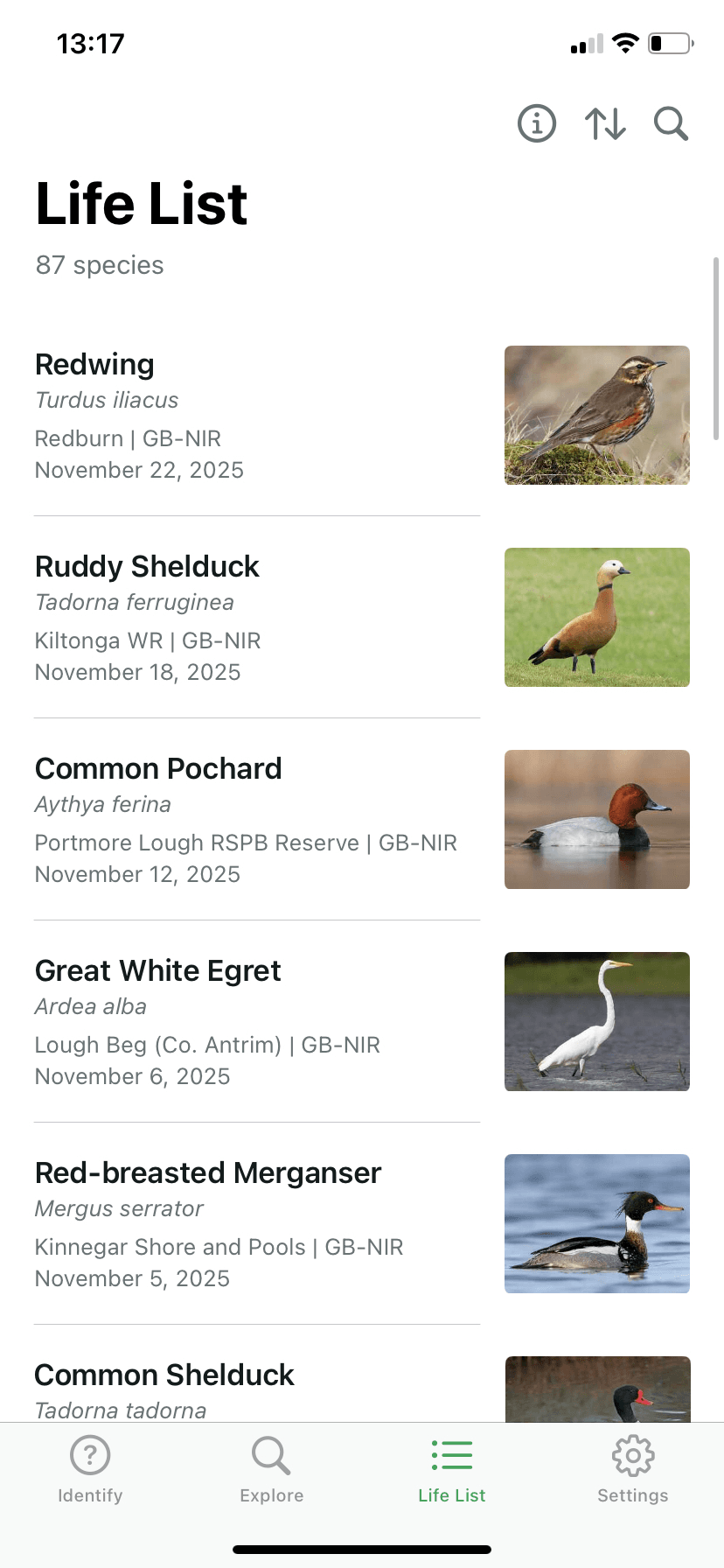
And then I decided I should really get some binoculars. £15 on Amazon, 8x magnification, small enough to fit in my pocket when I go for a cycle. I was filling up the life list with the common birds you'll see day-to-day like the Hooded Crow, Eurasian Robin, Common Woodpigeon - but I really wanted to up the shorebird representation. Any time I went out on my bike I'd throw the binos in my pocket and make sure my Merlin app was updated, hoping to see something new combing through the seaweed.
It was a strong Autumn to early Spring, adding 33 new species to the list at different times and from different locations. Some standouts include the beautiful Western House Martins that will forever remind me of fading Summer, and the Common Kestrel that hovered along the cliffs of a coastal walk with a new friend - Fine, you can call me a birdwatcher.
It finally became one of my main hobbies that Spring into Summer. A tough string of months was forcing me outside more than ever in my life as I looked for some distraction that didn't involve staring at a screen. I bought a new bike and was cycling sometimes 5 days a week, always with the binoculars folded up in my pocket because I knew I had never cycled out to watch the Terns diving and felt worse for it. I wasn't even doing it for the Life List at this point. Some days it felt like the only things keeping me sane were sore legs, obnoxiously loud Oystercatchers and rocks that make for really good seats.
Despite it all, I was enjoying the birding so much that I felt like I was beginning to outgrow the compact little binos. After a year of faithful service it was time to invest in some bigger weaponry; the Vortex Diamondback HD 8x42s. I am obsessed with these, and that's putting it lightly - they (expectedly) blew my old pair out of the water. Never had I been more excited to get outside and stare at a seagull.
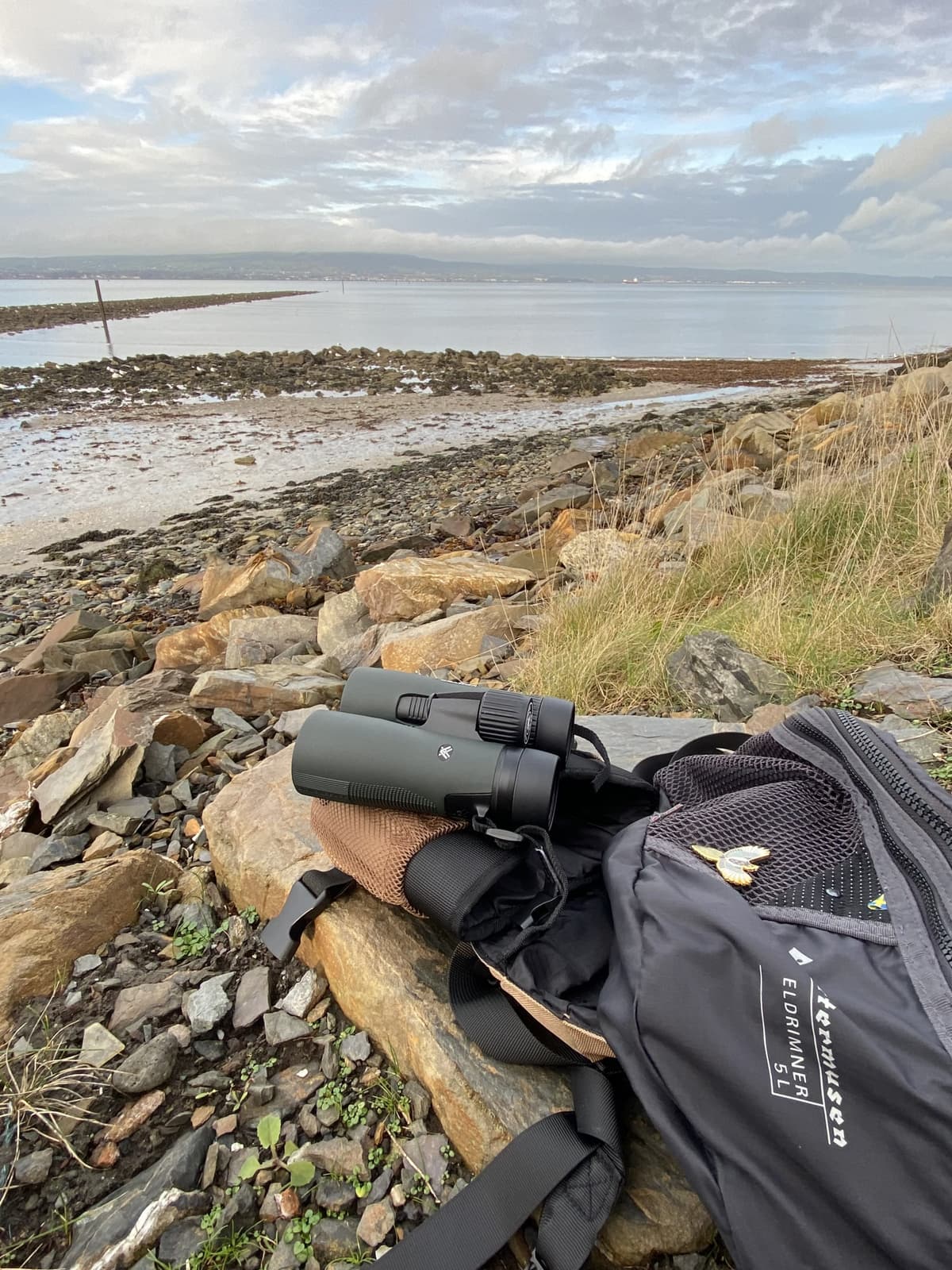
The Diamondbacks are much bigger with a 42mm objective lens (the last were only 22mm) and came with a cool harness-case to carry and store them in. Bigger lenses means a wider field-of-view and the overall better glass quality gives a much clearer and more accurate picture of your subject. I find it crazy that these aren't even close to the 'top-of-the-range' optics price-wise, but could easily last for life with enough care. I've even got some cool pictures through them using my phone!